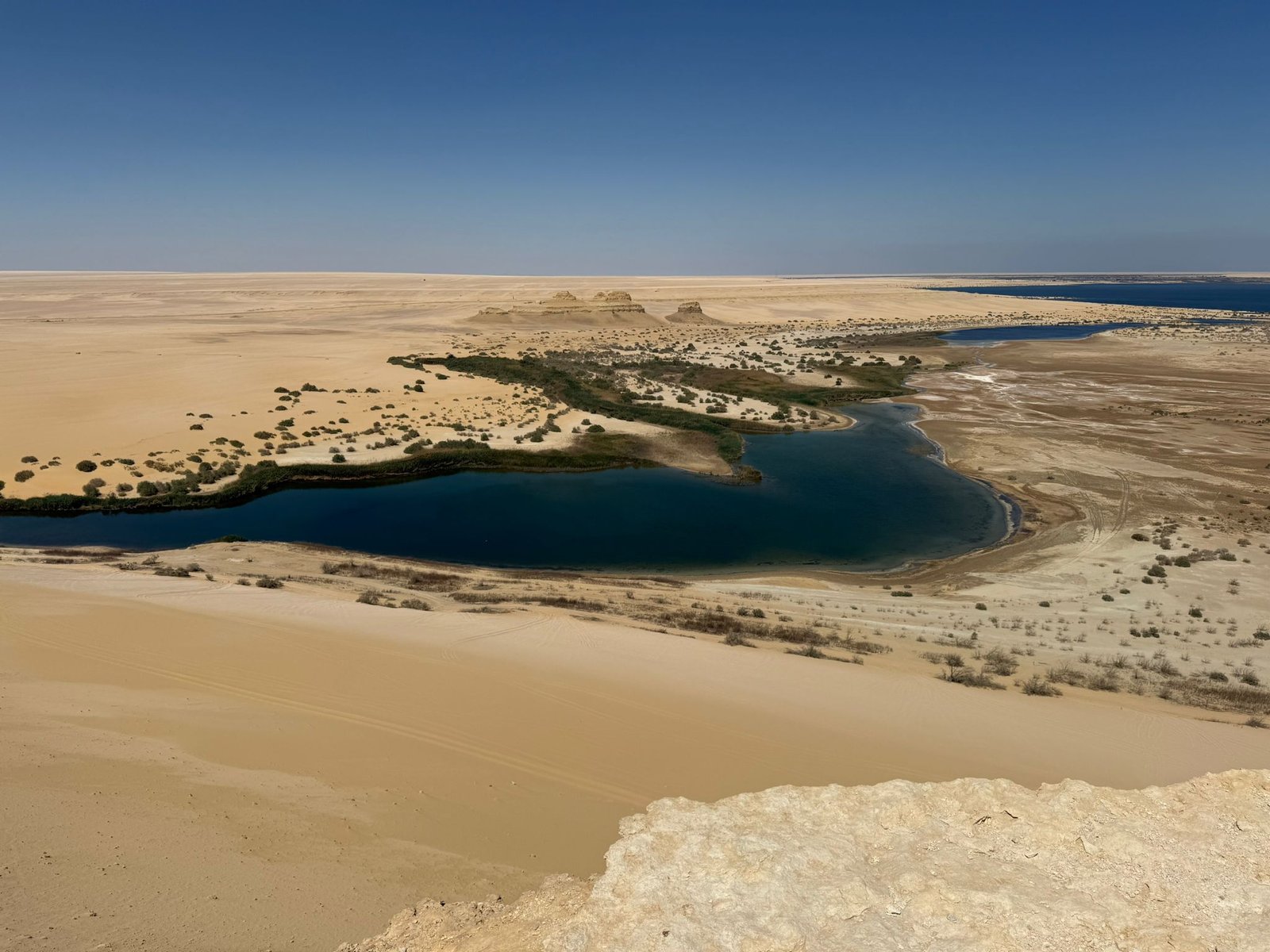
Just 90 minutes southwest of Cairo lies one of Egypt’s most surprising destinations: Fayoum. Unlike the desert landscapes many expect, Fayoum is an oasis of lakes, waterfalls, ancient ruins, pottery villages, and prehistoric treasures. It’s where nature, history, and rural Egyptian life blend into a destination that feels both timeless and refreshingly alive.
If you’re looking for an off-the-beaten-path experience in Egypt, Fayoum offers a rare mix of eco-tourism, archaeology, and authentic countryside charm.
Why Visit Fayoum?
Fayoum is one of the oldest agricultural regions in the world, fed by a natural depression connected to the Nile. Over millennia, it became home to pharaohs, Greeks, Romans, and today, artists and nature lovers.
Here, you can:
- See Egypt’s only waterfalls
- Walk among 40-million-year-old whale fossils
- Visit ancient Greco-Roman temples
- Enjoy birdwatching by a vast salt lake
- Explore a pottery village known across Egypt
- Experience peaceful desert landscapes without traveling far from Cairo
Wadi El Rayan: Egypt’s Only Waterfalls
The protected area of Wadi El Rayan is famous for its two man-made lakes connected by Egypt’s only waterfalls. Surrounded by golden desert dunes, this is one of the most scenic natural spots in the country.
Visitors come here to:
- Picnic by the lakes
- Sandboard on nearby dunes
- Photograph the waterfalls at sunset
- Spot gazelles and migratory birds
It’s a favorite weekend escape for Egyptians and a surprising sight for international travelers who never imagined waterfalls in Egypt.
Wadi Hitan: The Valley of the Whales (UNESCO Site)
Deep in the desert lies Wadi Hitan, a UNESCO World Heritage Site where you can see complete fossil skeletons of prehistoric whales that once swam here when the area was covered by sea.
Walking through Wadi Hitan feels like stepping into a natural history museum under the open sky. Fossils embedded in the sand tell the story of evolution from land mammals to sea creatures, making it one of the most scientifically important fossil sites in the world.
Lake Qarun: Birdwatching and Ancient Shores
One of the oldest natural lakes on Earth, Lake Qarun stretches across the northern edge of Fayoum. Its saline waters attract thousands of migratory birds each year, making it a paradise for birdwatchers and photographers.
Around the lake, you’ll find archaeological remains dating back to Pharaonic and Roman times, proving that this shore has been inhabited for thousands of years.
Tunis Village: Art, Pottery, and Rural Charm
Perched on a hill overlooking Lake Qarun is Tunis Village, a peaceful artistic community known for its pottery workshops, eco-lodges, and countryside views.
Originally transformed by Swiss potter Evelyne Porret, Tunis Village is now Egypt’s pottery capital. Visitors can:
- Take pottery classes
- Stay in charming guesthouses
- Enjoy farm-to-table meals
- Relax in a serene rural setting
It’s one of the most photogenic and relaxing spots in Fayoum.
Qasr Qarun: A Temple in the Desert
In the middle of the desert near Lake Qarun stands Qasr Qarun, a remarkably preserved Ptolemaic temple dedicated to the crocodile god Sobek.
Built in the Greco-Roman period, the temple’s architecture resembles Pharaonic style but with later influences. Walking through its dark stone corridors feels like discovering a hidden monument few tourists ever reach.
Best Time to Visit Fayoum
The ideal time to visit is from October to April, when the weather is mild and perfect for desert exploration, hiking, and lakeside walks.
Summer can be very hot, but early mornings and late afternoons still offer enjoyable experiences.
How to Reach Fayoum from Cairo
Fayoum is easily accessible by car in about 1.5 hours from Cairo, making it perfect for:
- Day trips
- Weekend escapes
- Nature retreats
- Cultural excursions
No flights, no long drives—just a quick journey into a completely different landscape.
Who Is Fayoum Perfect For?
Fayoum is ideal for:
- Nature lovers
- Photographers
- History enthusiasts
- Families looking for short escapes
- Travelers who want to see a different side of Egypt
- Eco-tourism and slow travel fans
Final Thoughts: Egypt Beyond the Pyramids
While most visitors come to Egypt for the pyramids and temples along the Nile, Fayoum reveals another dimension of the country—one of lakes, fossils, waterfalls, and living traditions.
If you want to experience Egypt’s natural beauty, rural authenticity, and hidden archaeological gems in one destination, Fayoum should be at the top of your list.